A gri-business entrepreneurship, and food production for improved nutrition outcome
Agri-business entrepreneurship, and food production for improved nutrition outcome: Sayid Mohamed technical Education College (SaMTEC)’s Agriculture Training Centre (ATC) in Luuq in collaboration with Centre for Research and Integrated Development (CeRID) provides both agriculture extension training and related entrepreneurship and food production activities (Figure 1).
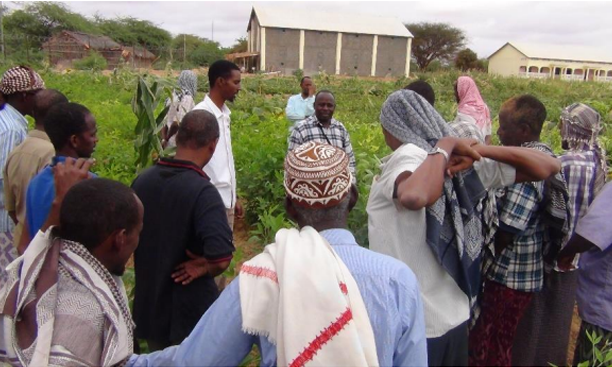
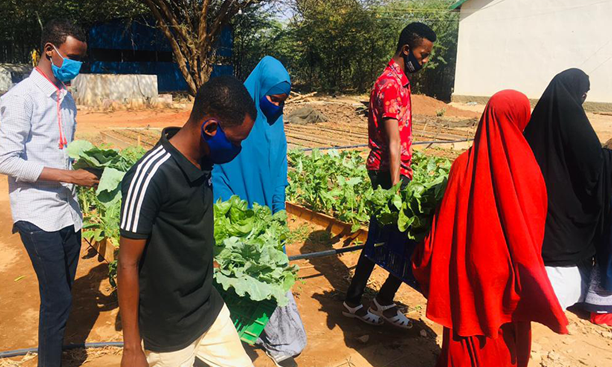
Training and mentorship on agri-business and entrepreneurship project in Luuq District, Somalia, is a joint venture between Trocaire, (CeRID) and SaMTEC which targets school age youth, with an overall aim of enabling youth to access to formal and informal employments. Female and male youth are trained on Permaculture principles, agroecology, Business & Basic computer skills for six months. SaMTEC’s ATC has introduced demonstration plots for different practical sessions. Trained youth are able to produce horticulture crops to access income (Figure 2).
Food production to improve nutrition outcomes project in Luuq district, Gedo, Somalia, is a joint initiative between Development and Peace- Caritas Canada, Trocaire, CeRID and SaMTEC. The aim of the project is to strengthen communities’ resilience to cope with recurring humanitarian hazards and shocks. The target audience of the project are IDPs female headed and vulnerable host community households, as well as vulnerable school-age youth. This project enables its target beneficiaries to access productive farming land, and knowledge and skills on environmentally friendly farming practices. Women from IDP households share about one to three hectors of farmland with their host community and the harvest are shared equally. Target audiences benefit from SaMTEC’s ATC and receive tailor-made agriculture training courses to improve the uptake of modern and environmentally friendly food production techniques
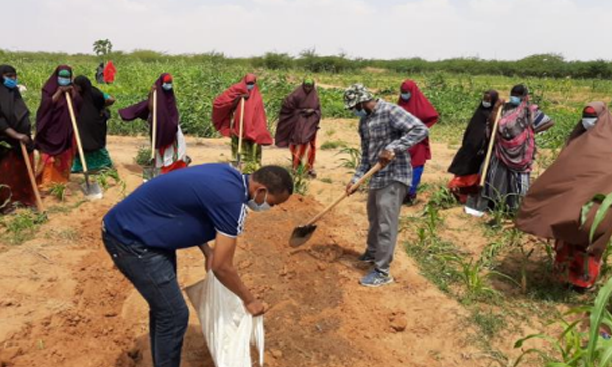
The project also provides one-off livelihood support assets including goats, chickens, while poor households are in the lean season. To ensure integration between IDPs to the host community, revolving loan and saving schemes were initiated by the project audience and formed cooperative groups. It is remarkable to acknowledge that once IDP households are in the trajectory to become resilient community which will in the short term able to access their source of food and income, and integrate with farming communities in the riverine areas of Gedo region (Figure 3)